Strong governance structures have long played an important role in advancing nursing excellence, professional practice, and staff engagement. Through shared governance, healthcare organizations have created meaningful opportunities for nurses and other team members to participate in decision-making, influence practice, and contribute to organizational success.
As governance cultures continue to mature, many organizations are exploring how to further strengthen professional accountability, ownership, and leadership at every level of practice. This ongoing evolution has led to growing interest in professional governance, a model that builds upon the principles of shared governance while placing greater emphasis on professional practice, outcomes, and collective accountability.
Transitioning from shared governance to professional governance is not about replacing existing structures or abandoning what has already been successful. Rather, it is about deepening the culture that supports shared decision-making, strengthening ownership for professional practice, and creating stronger connections between governance work and organizational outcomes.
This blog explores the differences between shared governance and professional governance, why organizations are making the transition, and practical steps healthcare leaders can take to ? support a sustainable professional governance model.
Understanding the Difference Between Shared Governance and Professional Governance
Shared governance and professional governance share many common principles. Both support collaboration, engagement, and the involvement of nurses in decisions that affect patient care and professional practice.
However, the focus of each model is fundamentally different.
| Shared Governance | Professional Governance |
| Emphasizes Participation | Emphasizes Accountability |
| Focuses on Shared Decision-Making | Focuses on Professional Ownership |
| Encourages Representation Through Councils | Promotes Responsibility for Outcomes |
| Often Structure-Driven | Culture-Driven |
| Provides a Voice | Creates Accountability and Action |
Shared governance creates opportunities for staff participation and input. Professional governance builds upon that foundation by establishing clear accountability for professional practice, quality outcomes, and organizational excellence.
While ownership, accountability, and shared decision-making are important elements of both models, professional governance places an even stronger emphasis on the connection between professional practice, decision-making, and outcomes. Staff are supported in not only contributing to governance work, but also in evaluating its impact, sustaining improvements, and advancing the profession through their collective accountability for excellence.

Why Organizations Are Moving Toward Professional Governance
The healthcare environment has changed dramatically over the past several years. Workforce challenges, increased patient complexity, financial pressures, and ongoing quality expectations require healthcare organizations to think differently about leadership and accountability.
Many organizations discover that traditional shared governance models no longer provide the level of ownership and professional practice necessary to address today’s challenges.
Professional governance offers a framework that supports:
- Greater accountability for professional practice
- Improved nurse engagement
- Stronger alignment between councils and outcomes
- Enhanced leadership development
- Better quality and safety results
- Increased professional ownership
- Sustainable nursing excellence
Organizations pursuing Magnet® designation, Pathway to Excellence® recognition, or broader nursing excellence initiatives often find that professional governance strengthens their ability to achieve and sustain meaningful outcomes.
Signs Your Organization Is Ready for Professional Governance
An organization should consider evolving from shared governance to professional governance when the structure exists, but the intended outcomes are not consistently being realized. Some of these drivers can include:
Councils Exist but Have Limited Influence
When councils meet regularly but have little authority to influence decisions, participation often declines. Team members may feel their input is valued but not acted upon.
Professional governance helps establish clear decision-making authority and accountability within governance structures.
Staff Participation Is Inconsistent
Low attendance, limited engagement, and difficulty recruiting council members may indicate that nurses do not see meaningful value in governance participation.
Professional governance creates a stronger connection between participation and professional responsibility.
Decisions Are Made Outside Governance Structures
When key practice decisions routinely bypass councils, governance structures risk becoming symbolic rather than truly influencing decisions, advancing practice, and driving outcomes. Successful professional governance models ensure that councils play a meaningful role in professional practice decisions.
Accountability Is Unclear
If responsibility for outcomes is difficult to identify, governance structures may be lacking the accountability necessary to drive improvement.
Professional governance clarifies who owns decisions, actions, and outcomes.
Council Work Is Not Connected to Outcomes
Councils should contribute directly to organizational priorities and patient care outcomes. When that connection is missing, governance efforts may lose momentum.
Professional governance strengthens the relationship between governance activities and measurable results.

Five Steps to Transition from Shared Governance to Professional Governance
Making the transition requires thoughtful planning, leadership commitment, and cultural alignment.
1. Assess Your Current Governance Structure
Before moving forward, organizations should evaluate their existing governance model.
Consider questions such as:
- Are councils functioning effectively?
- Is decision-making authority clearly defined?
- Do nurses understand their role in governance?
- Are outcomes connected to council work?
- Is accountability clearly established?
An honest assessment provides a starting point for identifying opportunities and barriers.
2. Create a Shared Vision for Professional Governance
Successful transitions begin with a clear understanding of what professional governance is and why it matters.
Leaders, council members, and frontline staff should work together to define what professional governance will look like within the organization.
This vision should emphasize:
- Professional accountability
- Ownership of practice
- Shared responsibility for outcomes
- Continuous improvement
- Excellence in patient care
Without a shared vision and understanding, governance changes may be perceived as structural adjustments rather than meaningful transformation.
3. Deepen Accountability and Ownership
Most organizations transitioning to professional governance already have council structures, charters, reporting relationships, and defined decision-making processes in place. Professional governance builds upon these foundations by strengthening accountability, ownership, and the connection between governance work and organizational outcomes.
As organizations evolve, it can be helpful to explore questions such as:
- How are councils evaluating the impact of their decisions?
- How are outcomes measured and communicated?
- Do staff understand their role in implementing and sustaining council initiatives?
- How are leaders supporting staff ownership and professional accountability?
- How are governance structures contributing to quality, safety, workforce, and patient care outcomes?
Professional governance encourages a deeper level of ownership for professional practice. Staff are supported in influencing decisions, advancing initiatives, evaluating results, and contributing to the ongoing success of the organization. As accountability and ownership grow, governance becomes increasingly integrated into the culture and daily work of the organization.
4. Strengthen Leadership Support
Professional governance cannot thrive without leadership commitment.
Leaders play a critical role in:
- Removing barriers
- Supporting council decisions
- Providing resources
- Encouraging participation
- Coaching future leaders
The most successful organizations view leaders as partners in governance rather than decision-makers who control governance activities. When leaders empower nurses to own professional practice, engagement and accountability naturally increase.
5. Build a Culture That Supports Professional Governance
This is often the most important step, and the one most frequently overlooked. Professional governance is not simply a structure. It is a culture.
Organizations that successfully transition to professional governance intentionally cultivate:
- Trust
- Psychological safety
- Healthy relationships
- Open communication
- Professional accountability
- Shared ownership
Without a supportive culture, even the most carefully designed governance structure will struggle to achieve its intended outcomes.

Common Challenges During the Transition
Every organizational change effort comes with challenges, and professional governance is no exception.
Resistance to Change
Some individuals may be comfortable with existing governance structures and uncertain about new expectations. Clear communication and ongoing education can help build understanding and support.
Unclear Roles and Responsibilities
Confusion regarding authority, ownership, and accountability can create frustration. Clearly defining expectations and any guardrails for decisions early in the process helps prevent misunderstandings.
Leadership Misalignment
Professional governance requires consistent leadership support. When leaders send mixed messages or fail to empower councils, governance efforts may stall.
Governance Fatigue
Organizations that have experienced multiple governance initiatives may encounter skepticism. Demonstrating early wins and connecting governance work to meaningful outcomes can help rebuild momentum.
Difficulty Measuring Success
Without clear metrics, organizations may struggle to demonstrate the value of professional governance. Establishing outcome measures from the beginning helps maintain focus and accountability.
Why Culture Is the Foundation of Professional Governance
Many organizations assume that transitioning to professional governance begins with council redesign or structural changes. In reality, it begins with culture. Professional governance flourishes in environments where relationships are strong, communication is open, and individuals feel empowered to contribute to organizational success. When nurses feel respected, heard, and supported, they are more likely to embrace accountability and ownership.
This is why governance transformation and culture transformation are often inseparable. Organizations that invest in professional relationships, leadership development, staff engagement, and healthy work environments create the conditions necessary for professional governance to thrive. Professional governance is not simply a structure that organizations implement; it is a culture they intentionally create and sustain. When shared decision-making, accountability, partnership, equity, and ownership become part of everyday practice, professional governance can flourish.
Professional Governance and Nursing Excellence
Professional governance is closely connected to many of the outcomes healthcare organizations strive to achieve.
Strong professional governance models support:
- Nurse engagement
- Professional development
- Staff retention
- Quality improvement
- Patient safety
- Patient experience
- Leadership growth
- Nursing excellence initiatives
By creating greater accountability and ownership for professional practice, organizations position themselves to sustain excellence over time. The result is a healthcare environment where nurses are empowered to influence practice, improve outcomes, and contribute meaningfully to organizational success.

Moving Beyond Shared Governance
Shared governance has played an important role in advancing nurse engagement and shared decision-making throughout healthcare. Today, many organizations are discovering that the next step in their journey is professional governance. Transitioning from shared governance to professional governance requires more than structural change. It requires a commitment to accountability, ownership, leadership development, and culture transformation.
Organizations that successfully make this transition create environments where professional practice is owned by those closest to the work and where nursing excellence becomes a shared responsibility across the organization. As healthcare continues to evolve, professional governance offers a powerful framework for building engaged teams, improving outcomes, and sustaining excellence for years to come.
Ready to Evolve from Shared Governance to Professional Governance?
Professional governance is about more than councils, charters, and decision-making structures. Sustainable professional governance requires a culture where accountability, ownership, relationships, and professional practice thrive.
At Creative Health Care Management (CHCM), we help healthcare organizations strengthen professional governance through a comprehensive approach that combines governance consulting, cultural transformation, leadership development, and evidence-based frameworks such as Relationship-Based Care® and the Interprofessional Relational Model™.
Whether your organization is evaluating its current governance structure, transitioning from shared governance to professional governance, pursuing Magnet® designation, or advancing its Nursing Excellence Journey, our team can help you build a governance model that supports lasting results.
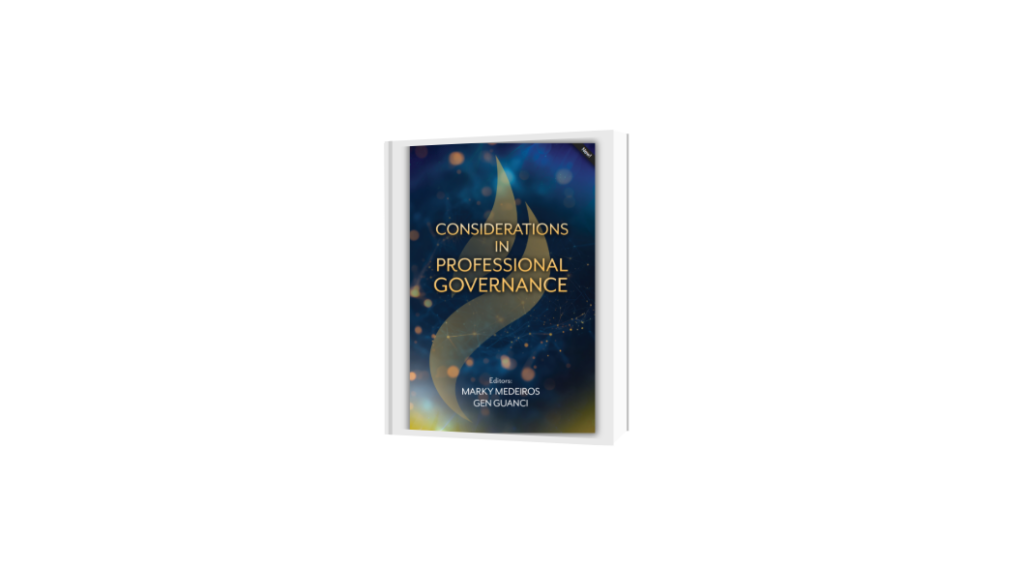
Looking to deepen your knowledge? We also recommend our book, Considerations in Professional Governance, a practical resource filled with strategies, insights, and real-world guidance to help healthcare leaders create and sustain effective professional governance.
Explore our Professional Governance solutions, attend our Professional Governance Summit, enroll in our Shared & Professional Governance Strategies That Work course, or connect with our consultants to start the conversation.
Ready to build a culture where professional governance can thrive? Contact Creative Health Care Management today.
Frequently Asked Questions About Shared Governance and Professional Governance
What is professional governance in healthcare?
What is the difference between shared governance and professional governance?
Why are healthcare organizations transitioning to professional governance?
How does professional governance support nursing excellence?
What are the first steps in transitioning from shared governance to professional governance?
How can Creative Health Care Management help with professional governance?

We look forward to the opportunity to bring the CHCM solutions to your organization.