Healthcare organizations across the country are striving to improve nurse satisfaction, strengthen patient outcomes, reduce turnover, and build cultures of excellence. One of the most respected ways to demonstrate this commitment is through Magnet® designation.
Recognized worldwide as the gold standard for nursing excellence, Magnet® designation signifies that an organization has created an environment where nurses are empowered to lead, collaborate, innovate, and deliver exceptional patient care.
Yet many healthcare leaders still ask:
- What exactly is Magnet® designation?
- How does a hospital achieve Magnet® recognition?
- What are the benefits of becoming a Magnet® organization?
- Is the Magnet® journey worth the investment?
This guide answers those questions and provides healthcare leaders with a practical overview of Magnet® designation, its requirements, and its impact on organizational excellence.
What Is Magnet® Designation?
Magnet® designation is the highest national recognition awarded to healthcare organizations for nursing excellence and quality patient care.
The credential is granted through the American Nurses Credentialing Center (ANCC) Magnet Recognition Program®, which recognizes organizations that demonstrate excellence in nursing practice, innovation, leadership, and patient outcomes.
Organizations that achieve Magnet® designation have demonstrated an ongoing commitment to:
- Exceptional nursing practice
- Professional development
- Shared decision-making
- Interprofessional collaboration
- Evidence-based practice
- Quality and safety outcomes
- Continuous improvement
While many organizations provide excellent care, Magnet® recognition validates that excellence through a rigorous and comprehensive evaluation process.
Why Was the Magnet® Program Created?
The Magnet® Recognition Program originated from research seeking to understand why some healthcare organizations were more successful than others at attracting and retaining highly qualified nurses.
Researchers identified specific characteristics that distinguished these organizations, including:
- Strong nursing leadership
- Professional autonomy
- Collaborative relationships
- Opportunities for growth and development
- Supportive work environments
These characteristics became the foundation of what we now recognize as Magnet® organizations.
Today, Magnet® designation remains one of the most respected indicators of nursing excellence worldwide.

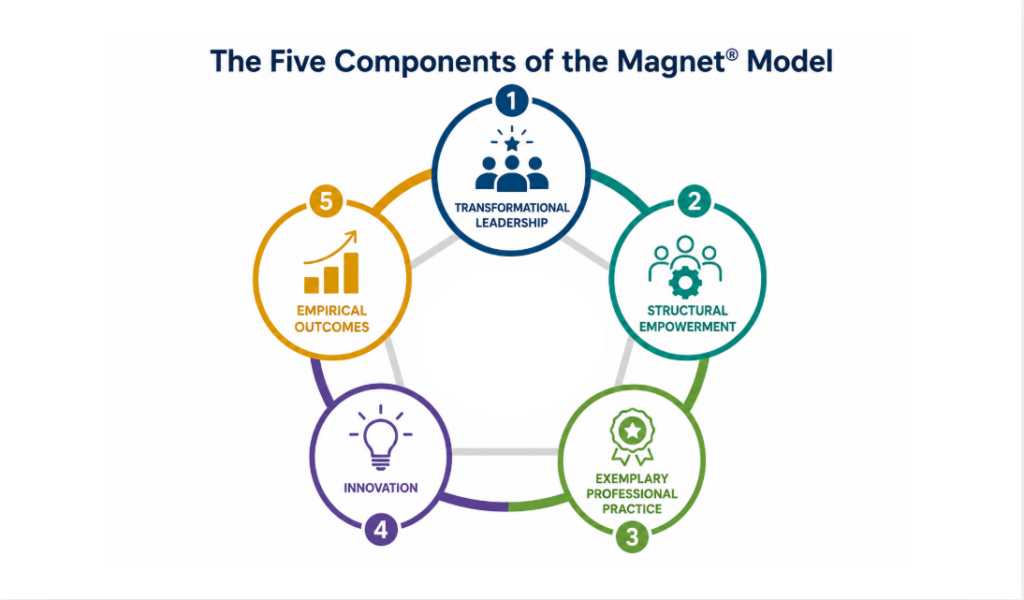
The Five Components of the Magnet® Model
Organizations pursuing Magnet® designation must demonstrate excellence across five key components.
1. Transformational Leadership
Magnet® organizations are led by visionary leaders who guide their teams through change, inspire innovation, and create a culture of excellence.
- Set strategic direction
- Promote professional growth
- Support innovation
- Foster accountability
- Build trust across teams
Strong leadership serves as the foundation for successful Magnet® journeys.
2. Structural Empowerment
Structural empowerment focuses on creating systems that enable nurses to participate in decision-making and influence organizational outcomes.
Examples include:
- Professional governance structures
- Leadership development programs
- Career advancement opportunities
- Community involvement initiatives
- Recognition programs
Empowered nurses are more engaged, satisfied, and invested in organizational success.
3. Exemplary Professional Practice
Magnet® organizations demonstrate outstanding nursing practice supported by evidence, collaboration, and patient-centered care.
This includes:
- Interprofessional collaboration
- Professional accountability
- High-quality clinical practice
- Strong patient advocacy
Exemplary practice ensures that patients receive consistent, evidence-informed care across the continuum.
4. New Knowledge, Innovations, and Improvements
Innovation is a cornerstone of Magnet® excellence.
Organizations must demonstrate their ability to:
- Advance evidence-based practice
- Support nursing research
- Implement innovative solutions
- Improve patient outcomes
- Evaluate and share results
This component encourages organizations to continually seek better ways to deliver care.
5. Empirical Outcomes
Perhaps the most important component, empirical outcomes require organizations to demonstrate measurable success.
Examples may include:
- Nurse satisfaction scores
- Patient experience metrics
- Quality indicators
- Safety outcomes
- Retention rates
- Clinical performance measures
Magnet® recognition is not based solely on programs or intentions, it requires organizations to demonstrate meaningful results.
What Are the Benefits of Magnet® Designation?
Healthcare organizations pursue Magnet® designation because it creates measurable value for nurses, patients, and the organization as a whole. Research continues to demonstrate the significant organizational benefits associated with Magnet® recognition.
Improved Nurse Recruitment and Retention
Nurses often seek employers that invest in professional practice, leadership development, and workplace culture.
Magnet® organizations frequently experience:
- Higher nurse engagement
- Improved retention
- Increased job satisfaction
- Stronger recruitment efforts
In today’s competitive workforce environment, these advantages can be significant.
Enhanced Patient Outcomes
Research has consistently linked Magnet® environments with improved patient care outcomes.
Benefits may include:
- Higher patient satisfaction
- Improved safety metrics
- Reduced adverse events
- Better quality outcomes
When nurses are supported and empowered, patient care improves.
Stronger Professional Governance
Many Magnet® organizations utilize shared governance and professional governance structures that encourage frontline nurses to participate in decisions affecting practice and patient care.
These structures help organizations:
- Increase engagement
- Improve accountability
- Strengthen communication
- Foster innovation
Effective governance models create opportunities for nurses to influence practice, quality, and patient care decisions. Professional governance often becomes a critical driver of Magnet® success.

Increased Organizational Reputation
Magnet® designation demonstrates an organization’s commitment to excellence and can enhance its reputation among:
- Patients
- Nurses
- Healthcare professionals
- Community stakeholders
- Prospective employees
The designation serves as a visible symbol of organizational excellence.
How Long Does It Take to Become a Magnet® Organization?
The Magnet® journey varies based on an organization’s starting point, resources, and level of readiness. Conducting a formal readiness assessment can help leaders identify strengths, gaps, and priorities before beginning the designation process.
For many organizations, preparation can take several years.
Key phases often include:
- Readiness assessment
- Gap analysis
- Strategic planning
- Infrastructure development
- Outcome measurement
- Documentation submission
- Site visit preparation
- Designation review
Organizations that approach the journey strategically are often better positioned for long-term success.
Common Challenges Organizations Face During the Magnet® Journey
While the benefits are significant, achieving Magnet® designation requires thoughtful planning and sustained commitment.
Common challenges include:
Building Professional Governance Structures
Many organizations must strengthen or redesign shared decision-making processes to align with Magnet® expectations. Organizations frequently partner with experienced Magnet® consultants to strengthen governance structures and prepare for Magnet® expectations.
Demonstrating Outcomes
Collecting, analyzing, and presenting meaningful outcome data can be complex.
Sustaining Engagement
Maintaining enthusiasm and participation over a multi-year journey requires strong leadership and communication.
Aligning Organizational Culture
Successful Magnet® organizations embed excellence into daily practice rather than treating designation as a standalone project.

Is Magnet® Designation Right for Your Organization?
Magnet® designation is not simply an award, it’s a strategic framework for creating and sustaining nursing excellence.
Organizations considering the journey should evaluate:
- Leadership commitment
- Nursing engagement
- Professional governance maturity
- Quality outcomes
- Organizational readiness
- Available resources
The most successful organizations view Magnet® designation as a cultural transformation journey rather than only a destination.
How Magnet® Consulting Can Support Your Journey
Whether your organization is exploring Magnet® designation for the first time or preparing for redesignation, expert Magnet® designation consulting can help accelerate progress and avoid common pitfalls.
Magnet® consultants can support organizations with:
- Readiness assessments
- Gap analyses
- Strategic planning
- Professional governance development
- Documentation preparation
- Leadership coaching
- Outcome measurement strategies
- Site visit preparation
Creative Health Care Management’s Magnet® consulting services help organizations assess readiness, strengthen professional governance, improve outcomes, and prepare for successful designation and redesignation efforts. Through our proven cultural transformation approach, we help organizations build the leadership practices, professional environments, and engagement strategies that sustain nursing excellence long after designation is achieved.
The Path to Nursing Excellence
Magnet® designation represents far more than an achievement, it reflects a sustained commitment to nursing excellence, professional practice, leadership, and exceptional patient care.
Organizations that pursue the Magnet® journey often discover that the greatest benefits extend beyond designation itself. Through stronger leadership, empowered nurses, improved outcomes, and a culture of continuous improvement, Magnet® principles can transform healthcare organizations for years to come.
If your organization is exploring Magnet® designation or seeking to strengthen its readiness, investing in expert guidance can help create a clear roadmap toward success.
Start Your Magnet® Journey with Confidence
Whether your organization is preparing for its first designation, pursuing redesignation, or strengthening the foundations of nursing excellence, expert guidance can help accelerate progress and avoid common pitfalls.
Connect with Creative Health Care Management’s Magnet® consultants to discuss your organization’s goals and readiness.
Frequently Asked Questions About Magnet® Designation
Is Magnet® designation only for hospitals?
How often must organizations renew Magnet® designation?
Does Magnet® designation improve nurse retention?
What role does professional governance play in Magnet® designation?
Sources
ANCC Magnet Model – Creating a Magnet Culture | ANA
MAGNET®, Magnet Recognition Program®, ANCC Magnet Recognition®, Journey to Magnet Excellence®, Pathway to Excellence® Program, Pathway to Excellence in Long Term Care®, Demographic Data Collection Tool®, DDCT®, Practice Transition Accreditation Program® (PTAP) are registered trademarks of the American Nurses Credentialing Center (ANCC). The products and services of Creative Health Care Management are neither sponsored nor endorsed by ANCC. All rights reserved. The content presented in here is the expressed opinion of the author/presenter and not that of the American Nurses Credentialing Center (ANCC).

We look forward to the opportunity to bring the CHCM solutions to your organization.