

In nature, nothing exists alone. A forest is not simply a collection of trees. A coral reef is not simply a collection of organisms. A thriving ecosystem is created through thousands of connections, relationships, and interactions that often cannot be seen from the surface. The same is true in organizations.
While leaders often focus on performance metrics, strategic initiatives, and individual accountability, culture is shaped by something far less visible: the connections between people. Culture is not created by a single person, a single department, or a single initiative.
Nature reminds us that lasting success is rarely created by individuals working alone. It emerges when relationships are strong, information flows freely, and every part of the system contributes to something larger than itself.

Beyond Silos: Seeing the Whole System
In many organizations, we unintentionally design structures that separate people. Departments. Roles. Titles. Reporting relationships. These structures help organize work, but they can also create boundaries that limit collaboration and shared understanding.
Nature operates differently.
A forest does not succeed because one tree grows taller than all the others. It succeeds because the entire ecosystem works together. Trees, soil, water, fungi, insects, and wildlife each play a role in sustaining the whole. The strength is not only in the individual parts. The strength is in the relationships between them. Organizations thrive the same way.
The question is not only: “How strong are our teams?”
The deeper question is: “How strong are the connections between our teams?”
Interdependence Is Not Weakness
Many traditional leadership models have celebrated independence. Be self-sufficient. Own your area. Drive your results. Those qualities matter. But nature teaches us that survival depends on something more powerful, interdependence.
Coral reefs provide one of the most extraordinary examples. Every organism contributes. Each plays a role. Each depends on others for survival. No single part carries the entire system.
Healthy organizations understand this. The best outcomes emerge when people see beyond their individual responsibilities and understand how their decisions, actions, and behaviors influence others. Because organizational excellence is never the result of isolated performance. It is the result of collective contribution.
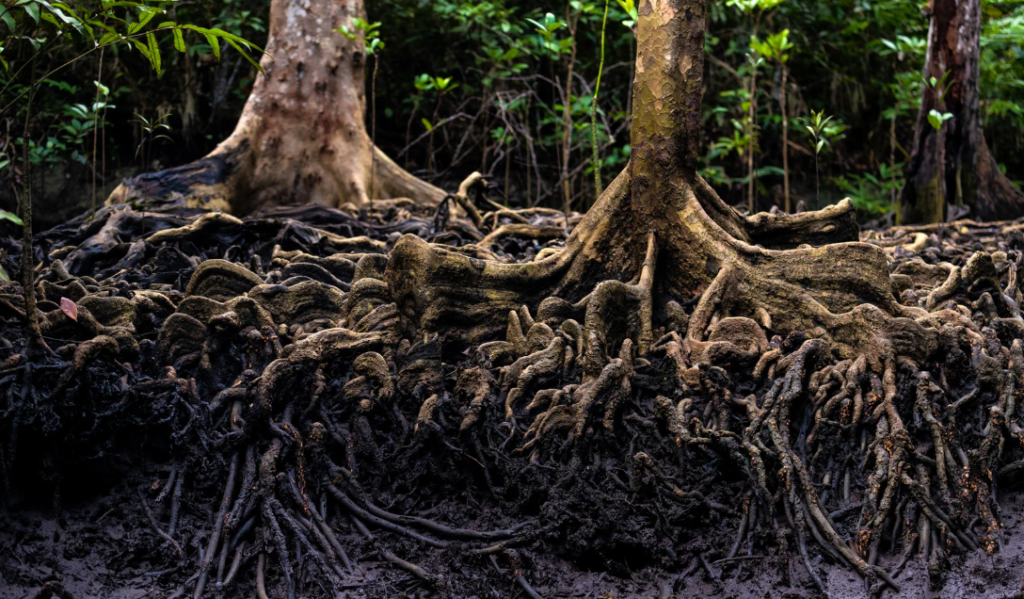
Psychological Safety: The Soil Where Cultures Grow
Every ecosystem depends on the right conditions. Without healthy soil, even the strongest seed struggles to grow. In organizations, psychological safety is part of that soil.
People need environments where they can:
- Share ideas
- Raise concerns
- Ask questions
- Admit uncertainty
- Challenge assumptions
A healthy ecosystem constantly exchanges information. So does a healthy culture. Silence is rarely a sign that everything is working. Sometimes silence means the environment has not created the conditions for people to speak. Great leaders pay attention not only to what is being said, but also to what remains unsaid.

Leadership as Ecosystem Stewardship
The role of the leader is changing. The strongest leaders are not simply managing individual performance. They are tending the ecosystem. They notice connections. They strengthen relationships. They remove barriers. They create conditions where people and ideas can grow.
Because sustainable cultures are not built through control. They are cultivated through connection. Nature has always understood this. The health of one impacts the health of all. And perhaps our greatest leadership opportunity is remembering that organizations, like ecosystems, thrive when everything is connected.
Call to Action
Great leadership begins with seeing organizations differently. If you’re ready to strengthen collaboration, build healthier workplace cultures, and develop leaders who inspire lasting change, explore Creative Health Care Management’s leadership development solutions, including the immersive Lead From the Wild™ experience. Together, we help healthcare leaders cultivate the relationships and environments where people, teams, and organizations can truly thrive.

Frequently Asked Questions About Nature-Based Leadership
What can healthcare leaders learn from nature?
Nature demonstrates that healthy systems thrive through connection, adaptability, collaboration, and continuous growth. Healthcare leaders can apply these same principles to strengthen workplace culture and improve team performance.
Why is connection important in healthcare leadership?
Strong connections improve communication, increase trust, support collaboration, and create healthier work environments. These relationships ultimately contribute to better staff engagement and patient outcomes.
What is an ecosystem approach to leadership?
An ecosystem approach views organizations as interconnected systems where every individual, team, and department influences the success of the whole. Rather than focusing only on individual performance, leaders work to strengthen relationships across the organization.
How can leadership development improve organizational culture?
Leadership development helps leaders build communication skills, foster psychological safety, strengthen collaboration, and create environments where employees feel supported and empowered to succeed.

Gen is driven by the desire to help clients create organizational excellence through measurable improvement. She thrives on helping others reach meaningful goals, including Magnet® designation.