
Transforming a Nurse Residency Program with Creative Health Care Management: How One Health System Increased New Graduate Nurse Retention from 70% to 100% While Achieving ANCC PTAP® with Distinction
For more than 10 years, a health system had invested in a well-established nurse residency program that was valued by participants and nurse leaders alike. The program supported new graduate nurses through their transition into professional practice and had evolved over time based on organizational needs and educator expertise.
When leadership decided to pursue ANCC Practice Transition Accreditation Program (PTAP®) accreditation, they quickly recognized an important reality: while many evidence-based practices already existed, the program had grown organically rather than being intentionally designed around the PTAP® framework. The organization was not interested in simply “checking the boxes” required for accreditation. Leaders viewed the accreditation process as an opportunity to critically evaluate every aspect of the transition-to-practice experience and ask important questions:
- Are we preparing every new graduate nurse for long-term success?
- Is the experience consistent across campuses, departments, units, and preceptors?
- Can we clearly demonstrate outcomes beyond satisfaction scores?
- Have we created a sustainable infrastructure that will continue to improve after accreditation?
They wanted a program that was not only accreditation-worthy but strategically aligned with organizational goals for workforce development, retention, professional practice, and quality outcomes.
CHCM's Approach
Creative Health Care Management (CHCM) partnered with Nursing Professional Development (NPD), owners of the nurse residency program, to redesign the existing residency program. Rather than starting from scratch, CHCM fostered the preservation of the strengths of the existing program while systematically aligning every component with ANCC PTAP® standards and current evidence on successful transition-to-practice programs.
The Engagement Included
Comprehensive Program Assessment
CHCM conducted an in-depth review of the organization’s residency program, including:
- Curriculum
- Governance
- Policies
- Educator and preceptor roles
- Participant experience
- Outcome measures
- Documentation
- Evaluation methods
- Evidence required for PTAP® appraisal
This assessment identified opportunities to strengthen consistency, sustainability, and alignment with PTAP® criteria.
Intentional Program Design
Working collaboratively with Nursing Professional Development Professionals over 6–12 months, CHCM supported the redesign of their residency program to ensure every component intentionally supported successful transition into professional practice. Enhancements included:

- Alignment of all program elements with ANCC PTAP® standards
- Structured learning progression across the residency experience
- Integration of evidence-based transition-to-practice principles
- Clear role expectations for educators, leaders, preceptors, and participants
- Improved governance and oversight structures
- Standardized processes across all participating practice areas
Transforming Preceptor Development
One of the most significant opportunities involved expanding and enhancing ongoing preceptor preparation. Rather than relying on a traditional one-day preceptor workshop, as many organizations do, CHCM helped the organization build a comprehensive ongoing preceptor development system that included:
- Standardized selection criteria
- Foundational education
- Ongoing coaching
- Competency validation
- Performance expectations
- Feedback mechanisms
- Continuing development opportunities
- Recognition of preceptor excellence
This transformed precepting from a single educational event into an organizational practice that consistently supported new graduate success.
Building an Outcomes-Driven Program

CHCM also helped the organization move beyond measuring attendance and participant satisfaction by establishing meaningful outcome measures that demonstrated program effectiveness and addressed the ANCC PTAP® outcome requirements. Together, the team identified processes to monitor:
- Retention
- Readiness for practice
- Confidence
- Competence
- Progression through the residency
- Program effectiveness
- Continuous quality improvement
Documentation and evidence collection processes were standardized so that program data became useful for both accreditation and ongoing organizational decision-making.
Preparing for Accreditation and Beyond
Key Transformations at a Glance
| Before | After |
|---|---|
| Program evolved organically | Program intentionally aligned with PTAP® Standards |
| Variations across practice settings | Standardized systemwide experience |
| One time preceptor education | Ongoing preceptor development and validation |
| Emphasis on attendance and satisfaction | Meaningful workforce and practice outcomes |
| Accreditation preparation as a project | Sustainable continuous improvement infrastructure |
Within one year of redesign, the program produced measurable improvements in workforce outcomes, organizational performance, and financial impact.
Accreditation Success
The organization successfully achieved ANCC Practice Transition Accreditation Program (PTAP®) with Distinction. The appraisal team recognized not only compliance with the standards but the overall strength, consistency, and maturity of the residency program.
Workforce and Financial Outcomes
The health system hired approximately 122 new graduate nurses annually. Before the redesign, one-year retention was approximately 70%, meaning an estimated 37 new graduate nurses left the organization during their first year.
Following implementation of the PTAP®-aligned program, one-year retention increased to 100%, allowing the organization to retain approximately 37 additional nurses. Using an estimated RN replacement cost of $70,000 per nurse, the organization avoided approximately $2.59 million in first-year turnover costs.
After accounting for an estimated annual program investment of $350,000, the organization realized an estimated net annual financial benefit of $2.24 million, representing a 640% return on investment.
Projected Five-Year Financial Impact
If the organization sustains 100% one-year retention and program costs remain consistent, the projected five-year impact includes:
$12.95 million
in avoided
turnover costs
$1.75
million
in program
investment
$11.2
million
in estimated net
financial benefit
** Financial estimates are based on approximately 122 annual new graduate hires, an increase in one-year retention from approximately 70% to 100%, an estimated RN replacement cost of $70,000, and an estimated annual program cost of $350,000. Figures have been rounded. Five-year estimates are projections based on sustained retention, hiring volume, replacement costs, and program investment.
Key Transformations at a Glance
| Component | Annual Impact | Five-Year Total | Notes |
|---|---|---|---|
| Avoided Turnover Costs Based on approximately 37 additional nurses retained annually at $70,000 replacement cost per nurse | $2.59 million | $12.95 million | 122 new graduates hired annually 36% improvement in one-year retention (70% to 100%) |
| Program Investment Estimated annual cost of the PTAP®-aligned program | $350,000 | $1.75 million | Program investment assumed consistent over five years |
| Net Financial Benefit Avoided turnover costs minus program investment | $2.24 million | $11.2 million | Represents estimated net financial benefit to the organization |
| Return on Investment (ROI) Net financial benefit divided by annual program investment | 640% | – | ROI calculated as: $2.24 million net benefit ÷ $350,000 investment |
The organization also experienced dramatic improvements in new graduate workforce outcomes, including:
- Increased confidence as nurses transitioned into independent practice.
- Improved competence through a structured, evidence-based developmental pathway.
- Greater readiness for professional practice supported by intentional learning experiences and consistent preceptor engagement.
Organizational Outcomes
The work also created lasting organizational benefits:
- Standardized transition-to-practice experiences across nursing departments and practice settings.
- Comprehensive preceptor development infrastructure with ongoing support and accountability.
- Stronger alignment between residency education, professional practice, and organizational goals.
- Meaningful outcome measurement that informs future program improvements.
- Sustainable processes that support continued PTAP® success and future reaccreditation.
Client perspective
We originally believed we were preparing for an accreditation survey. What we discovered was an opportunity to completely strengthen how we support new graduate nurses. The accreditation became the outcome of the work, not the reason for doing it. Our residency program is now more consistent, more intentional, and better positioned to prepare nurses for long-term success.
— Nurse Residency Program Director
Key financial outcomes at a glance
| Measure | Impact |
|---|---|
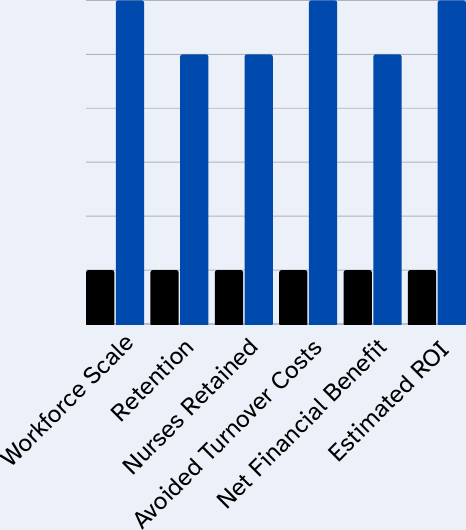
| Workforce Scale | Approximately 122 new graduate nurses hired annually |
| Retention | Increased one-year new graduate nurse retention from 70% to 100% |
| Nurses Retained | Approximately 37 additional new graduate nurses retained |
| Avoided Turnover Costs | Approximately $2.59 million annually |
| Net Financial Benefit | Approximately $2.24 million annually after estimated program costs |
| Estimated ROI | 640% |
Key financial outcomes at a glance
| Area | Impact |
|---|---|
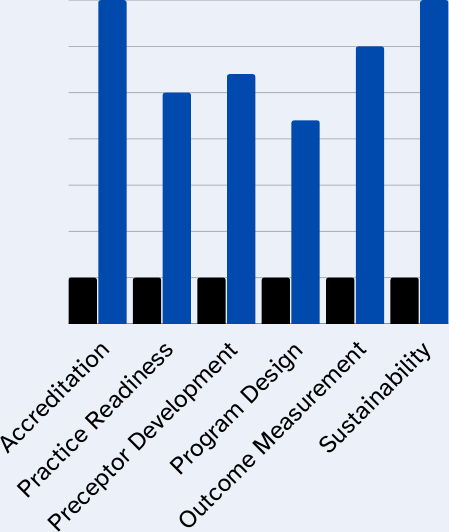
| Accreditation | Achieved ANCC PTAP® with Distinction |
| Practice Readiness | Improved confidence, competence, and readiness for independent professional practice |
| Preceptor Development | Implemented a comprehensive, standardized preceptor development system with ongoing coaching and support |
| Program Design | Residency program intentionally aligned with ANCC PTAP® standards and evidence-based transition-to-practice practices |
| Outcome Measurement | Established meaningful evaluation processes to measure program effectiveness and workforce outcomes |
| Sustainability | Created a framework for continuous improvement that supports long-term success and future reaccreditation |
Why it matters
Organizations often assume that pursuing PTAP® accreditation requires creating an entirely new residency program or that their current program would meet all the ANCC requirements of an accredited Nurse Residency program. In reality, many organizations already have several strong foundational elements in place, though gaps remain. The greatest opportunity lies in intentionally aligning existing strengths with evidence-based transition-to-practice principles, strengthening preceptor development, standardizing processes, and building meaningful outcome measures.
This project demonstrated that PTAP® accreditation can become much more than an external recognition. When approached strategically, it becomes a catalyst for transforming the entire new graduate experience by improving nurse readiness, strengthening workforce stability, and creating lasting organizational value.


